Showing posts with label films. Show all posts

Sunday, December 31, 2017

New Year's Eve Gone By

When I was a kid growing up in New Jersey, naturally we watched television out of New York City. This was back in the 70's, when there were only three networks (2, 4, and 7) and three independent channels (5, 9, and 11).

But what I remember most about New Year's Eve wasn't the ball dropping on television, but rather the movies that were played. I have no idea why, but channels 5 and 11 always played either Yellow Submarine or 2001: A Space Odyssey.

I've decided to celebrate both my long-past youth and the holiday by watching both films this year on the eve of the new year. We had planned to have people over to celebrate, but bronchitis has swept through the house, and we'll have a small, cough-filled, family celebration this year.

With Chinese food. That's the other tradition. You always have Chinese food on New Year's Eve.

Happy New Year, everyone.


Wednesday, March 23, 2016

A bit of horror from my childhood

Back when I was a kid, I couldn't get enough of horror movies. We're talking like 1975 and earlier horror movies. So no Halloween, Friday the 13th, or anything like that. I was enthralled with the classics; Universal films like Frankenstein, Dracula, and the Creature from the Black Lagoon. Hammer films like Horror of Dracula, Curse of Frankenstein, etc. And of course Tojo films like Godzilla, Godzilla vs. Mothra, King Kong Escapes, and so forth (plus their rival studios' offerings like Gamera!).

And of course there were a lot of other movies in there as well. Science fiction back then was tossed into the horror movie mix with abandon, and vice versa. So include wonders like Planet of the Apes, Silent Running, those wonderful Ray Haryhausen movies, and Colossus: The Forbin Project into the mix.

Of course I was a huge Famous Monsters of Filmland fan, and had a thick stack of magazines in my room, most of which got quite worn over the years. But when I was about 8 years old or so, I got a pair of books about horror movies from a local bookstore, and they were my constant companions. I had completely forgotten the titles (and indeed one title still eludes my memory and my Google skills), but I recently found one on eBay; A Pictoral History of Horror Movies.

To say I had read this book repeatedly when I was just a youngin' is an understatement. These books were my constant companions. I read them and read them and read them, and viewed all the wonderful photos of movies I had seen - usually on Chiller Theater on channel 11 in New York, which showed all sorts of movies from the 30's onwards - and drilled them into my memory.

So when I found that one book, A Pictoral History of Horror Movies, it was like being transported back to 1975. I still remember every picture, every caption, and even a lot of the text. That was a simpler time in horror movie-dom; fewer serial killers (and the ones that were there were kitschy and flashy and usually played by Vincent Price) and more monsters. And I loved it. There's a certain classiness, and of course more than a little self-aware silliness, in there that modern horror movies (which seem to veer more and more into torture porn, body horror, and SHOCK, none of which I particularly like) simply lack.

Hell, I still love it.

Wednesday, January 20, 2016

New Suicide Squad Trailer

And this one looks a lot more fun than the dark, serious tone of the first one. Obviously, you can't judge a movie by its trailers alone, but this could be as fun as Deadpool looks to be.


Sunday, December 6, 2015

My Top Three Favorite Holiday Movies

'Tis the season, and our televisions are inundated with holiday movies, specials, and the like. I thought I'd share my favorites.

Miracle on 34th Street

The 1948 version, of course. This is just such a wonderful movie, with outstanding performances (including especially Edmund Gwenn as Kris Kringle), the theme of "wonder vs. the scientific mindset" and a wonderfully "nice" twist ending, it's hard to find anything to disagree with it. Plus it has the iconic scene where the Post Office brings in bags and bags of mail "to Santa" into the courtroom; that's a scene that stands up against any other in cinema. "Christmas isn't just a day, it's a frame of mind."

How the Grinch Stole Christmas

This is one of those films that's worth it for the soundtrack alone. With all due respect to Jim Carrey, Boris Karloff will always be the Grinch to me. A wonderful tale that demonstrates that the spirit of the holiday is made up of genuine emotion and feeling for one's fellow people, rather than a particular religious event or commercial spend-fest.

A Christmas Carol

There are a number of excellent interpretations of this story by Dickens (and more than a few awful ones), but I can't get enough of the George C. Scott version (1984). Mr. Magoo (1962) is a close second, though. I especially like it because it reminds us that in the Germanic mindset, Yuletide is the time when the veil between worlds is thinnest, and the shades of our ancestors walk the Earth (something that's reflected in the stories of the Wild Hunt, among many others). And the production values can't be beat.

(Honorable mention)

Hehehe...


Saturday, October 24, 2015

31 Days of Halloween: Lovecraft Films

It's well-known that H.P. Lovecraft is one of the fathers of modern horror - the "weird tale" as he would have put it. Many people also know about modern films such as Dagon, Re-Animator, In the Mouth of Madness, and others. But many don't know about the wonderful H.P. Lovecraft Historical Society, which for years has been producing faithful adaptations of many of Lovecraft's works, and for the most part these films are much, much better than their Hollywood counterparts.

For my money, the best adaptation of a Lovecraft film is The Call of Cthulhu, a silent film done by the HPLHS. It's a faithful adaptation of both the story and the period in which Lovecraft was writing. It's done as if it was done while Lovecraft was still alive, and it works beautifully.


There are also several other Lovecraft films to be had, such as the Whisperer in the Darkness:


In addition, the H.P. Lovecraft Film Festival has been going on in Seattle for many years, and they've put some of the films (both features and shorts) on DVD. Most of these have been available on Netflix, which is where I saw them, and they are every bit as good as anything you'll see in a theater.


Monday, October 19, 2015

31 Days of Halloween: Vincent Price

If pressed to name a single actor who just means "horror movie" in my mind, it would be Vincent Price (with Christopher Lee and Peter Cushing close behind). He was just so versatile within the genre, it's almost difficult to appreciate just how many facets he was able to demonstrate, yet still remain true to the horror film.

While he is mostly known for being urbane and gentlemanly (and that would be his default character mode for his career), he could still present an air of menace with little more than a glance or sneer. He could switch in one moment from a rather foppish gentleman into a leering depraved maniac (House of Wax). He was also noted for his adaptations of Poe works (House of Usher, the Raven, etc.).

His aptitude for comedy was enormous, and even when he was playing a straight role, as in House on Haunted Hill, his comedic asides were essential in breaking the unrelenting tension and setting up even greater tension later. That comedic timing served him well in his various other roles as well, but he could do flat-out comedy excellently (such as in The Comedy of Terrors, with the absolutely hilarious Peter Lorre).


Plus he could reach outside of the horror genre into action/comedy (playing the villainous Egghead in Batman) and of course straight theatrical roles, playing Cardinal Richelieu in an adaptation of the Three Musketeers, and Bakka the Master Builder in the Ten Commandments.

He could even go for an entire film without speaking (the two Doctor Phibes films, wherein Price acted entirely in pantomime, save for some voice-over work that was as absurd as it was creepy). He defined the "maniac killing people in bizarre ways" genre, and in his way set the stage with Phibes and Theater of Blood, wherein he played the scorned actor Lionheart, killing people according to the model set forth in Shakespeare's plays. I would argue there would have been no 80's slasher movie craze without those groundbreaking efforts.


What many don't know is that he was a gourmet cook, and accomplished art critic and collector (he had a teaching job in art history, and wrote several books on the subject). All in all, a terrific actor, and one who really does define the horror film genre.

Thursday, October 15, 2015

Yes, Hulk is teaming up with Thor

Now it's official, apparently. Thor 3: Ragnarok, will have Mark Ruffalo's Hulk (and, of course, Bruce Banner) as a co-star.

Personally, I think this is a great idea. So many people were gushing about the Bruce Banner/Tony Stark bromance in the first two Avengers films, but I think the warrior camaraderie of the Hulk and Thor has just as many opportunities. The good-natured deadpan Hulk smash into Thor's head in the first Avengers movie was, I think, an indication that there was a certain respect between them, warroir to warrior.

Looking forward to seeing how this plays out. Marvel has (rightly, I think) figured out that Hulk doesn't work as a stand-alone film character, and the rights issues I'm sure don't help matters. I'd love to see the Hulk showing up across the MCU. Seems the best way to use the character.

At least there's some bit of good MCU news, now that the rumor about the Fantastic Four has been squashed!

Sunday, October 11, 2015

Tying together SHIELD and Civil War

There's been some speculation recently as to whether the events in Marvel's Agents of SHIELD will have any sort of direct tie-in to what happens in the upcoming Captain America: Civil War, as shown in a recent interview with Clark Gregg:
“Civil War has always been about the registration of superheroes and people with powers. I suspect what we’re doing will connect with that in some way,” Gregg says. “What I like about what Marvel has done with our show is we explore a broader part of what’s going on in that stuff. Sometimes it connects in a big way. For instance with Winter Soldier, you’re seeing more hours of that dynamic, of suddenly realizing seeing people you’ve worked your whole life for are part of this evil organization trying to kill you, that personal betrayal we get to play out for hours more.”
After all, we've seen tie-ins with the movies before, such as the big one where the show was completely changed (much for the better) after Captain America: The Winter Soldier, and just this week, when they showed the son of Baron von Strucker (who was killed in Avengers: Age of Ultron) being recruited to help run Hydra.

But in regards to Civil War, and the Superpower Registration Act (or whatever it ends up getting called), I would submit that the television show has already paved the way for the necessity of such a law. Having nothing to do with the show's introduction of the Inhumans, the terragen-infused fish oil creating super-powered people all over the world, or anything else.

The Superpower Registration Act will be necessary because SHIELD is no longer able to maintain "the Index".

The Index was SHIELD's list of all individuals with super-powers, and was one of the ways they were able to control knowledge of the existence of such people among the general public. If something weird happened, SHIELD could cross-check the Index for anyone who might be able to do such things, and be all the closer to putting a cork in them. For those who were less easily controlled, SHIELD also maintained several prison facilities, including the Fridge, which we saw emptied of inmates after Hydra's existence was discovered.

I think that's going to be one of the big motivations for the creation of the Superpower Registration Act, or at least one of them. It makes sense that, once SHIELD isn't able to do the job, conventional governments will want to do it, using the big incident supposedly at the beginning of the new film as a pretext.

31 Days of Halloween: Mad Monster Party

Remember all those Rankin-Bass stop-motion Christmas specials? Santa Claus is Coming to Town, Rudolph the Red Nosed Raindeer, The Year without a Santa Clause, and so forth? Well, did you know that they also did a Halloween one - a full-length feature film (that was actually in theaters!) with just about every movie monster known?

Well they did. And it was called Mad Monster Party.

Like those other stop-motion specials, Mad Monster Party featured a full soundtrack of original songs, like "You're Different" and "Do the Mummy", and as might be expected had a lot of bad puns and awful jokes, but it didn't matter because it was aimed at kids, who would just eat the stuff up anyway, like I did.


Boris Karloff did the voice of Doctor Frankenstein, who, having made his greatest scientific achievement (an ultimate explosive), decides to retire. He invites all of the great monsters (Dracula, the Invisible Man, the Monster and his Bride (voiced by, and looking like, Phyllis Diller) the Mummy, Wolfman, Dr. Jeykell, Igor, etc. etc.) to his island to name his successor. In addition, he invites his hapless nephew Felix Franken, who provides a lot of the comedy through his not realizing what's going on around him. It's a hoot in general, with the monsters trying to kill Felix to keep him from being named Frankenstein's successor, and then the whole thing is interrupted by King Kong coming to the island, complete with a fight against zombie-piloted biplanes. The film ends with the island and all the monsters being destroyed, with just Felix and Francesca (another of the Doctor's creations, but that's not made clear right away), and the implication that Felix is just another creation as well.

The songs are corny, as is the comedy, but when you're of the right age, it's a blast. And looking back on it (it's available on DVD ridiculously cheap) it still holds up fairly well as a light bit of fun. Definitely keep an eye out for it.

Saturday, October 3, 2015

More Marvel One-Shots possibly on the way

As part of their coverage of the release of Avengers: Age of Ultron, Screen Rant noticed this wonderful bit of news from Kevin Feige:
“We talk about that [Marvel One-Shots] a lot actually, because when you have tables like that (lots of potential storylines, most unexplored in the finished film), and we go, What are we going to do with Howard [the Duck]? What are we going to do with Cosmo? We should do a one shot with Michael Pena. I mean, the universe is big. We’re moving up to three movies a year and I’m not sure how much beyond that we can go so the one shots are great for: ‘oh we have this great idea, wouldn’t it be fun to see…’ We talk about it a lot. We’re a relatively small team. We’re comfortable doing three movies a year so it’s just about finding the time and the place. But we have a backlog of ideas.”
They also mention that Marvel's "own internal research has proven that including these shorts as exclusive content on home video releases significantly boosts sales and promotional opportunities."

For those who aren't familiar, the Marvel One-Shots (named for a comic book line by the same name) are short films that work in-between the larger films and television shows, often showcasing minor characters, filling in plot holes, or just exploring things that were interesting, but just didn't fit into a larger movie. They've been included as exclusive content on the Blu-ray editions of some of the films (some can also be found online). To date, we've seen:
  • The Consultant – Agents Coulson and Sitwell discuss how to sabotage the plan to bring the Abomination (from the Incredible Hulk) into the Avengers Initiative. 
  • A Funny Thing Happened on the Way to Thor’s Hammer – Agent Coulson stops a convenience store robbery on the way to the first Thor movie.
  • Item 47 – A couple of low-level crooks find a Chitauri weapon left over from the Battle of New York.
  • Agent Carter – Peggy Carter takes on a dangerous criminal by herself while working at the SSR. This ended up getting turned into the Agent Carter television series.
  • All Hail the King – While in prison, Trevor Slattery (who pretended to be the Mandarin in Iron Man 3) is interviewed by someone who is more than he first appears.
That last one, by the way, is a masterpiece. Not only does it redeem the whole "they ruined the Mandarin forever!" complaint that many people shared (I'm not one of them - I loved the twist), but we also see Justin Hammer (from Iron Man 2) in a cameo, and Ben Kingsley is absolutely brilliant as the clueless stoner who can, seemingly at the flick of a switch, turn on the steely-eyed killer.

I love these one-shots, and have really been disappointed that they haven't done more. A one-shot with Cosmo, the telepathic Russian dog from Guardians of the Galaxy? Ten minutes of Michael Pena (from Ant-Man) doing his shtick? Something with the Collector, or watching a Nova Corps operative take out some space-criminal? A 1960's Nazi hunter in Argentina coming across an old Hydra officer? Someone comes nosing around Barton's farm who shouldn't be there? Seeing Jessica Jones come into the office of Murdock & Nelson for a consultation on some case? A day in the life of Aunt May (with Spider-Man always in the background somewhere)?

Oh, yes please.

31 Days of Halloween: Franken-ranking

Universal Studios made seven films featuring Frankenstein's Monster, whose celluloid version as a mindless violent brute was very different from Mary Shelley's tragic genius. But still, these films form what is undoubtedly the popular conception of what Frankenstein's Monster (often erroneously referred to as "Frankenstein") is. Here are my thoughts on the various portrayals of the Monster in those original Universal films...

7: Abbott and Costello meet Frankenstein (1948). Ugh. Let's get this one out of the way first. This was the last of the classic Universal Frankenstein films, and it shows, a last grasp at some money by moving from parody into straight-out mockery. The monster craze was over, as was the war, and people wanted something lighter. Fun when you're eight, I suppose, but painful as a root canal when you're older and appreciate what is being decimated.

6. House of Frankenstein (1944). People complain that superhero films today are crammed full of too many villains, but this one has the Monster, Wolfman, and Dracula, as well as a mad scientist and his hunchbacked assistant. So it's stuffed to the gills, and while Glenn Strange does a passable job as the Monster, one wonders why Boris Karloff was here in a different role (Niemann, the mad scientist). This was the last of the "serious" Universal Frankenstein films, and it is rather listless. And Dracula seems to be here as an afterthought; he has no real connection with the rest of the plot, and is killed off in the first 15 minutes of the film.

5. The Ghost of Frankenstein (1942). This is the last of the series that is a direct sequel to its predecessor, and sees Lon Chaney Jr. take over the role of the Monster from Karloff. The doctor here is Ludwig Frankenstein, second son of the original Baron, who thinks he can cure the Monster's violent nature, but ends up putting the evil Ygor's brain in the Monster's powerful body instead. It's not a bad film all around, but it does seem like something of a rehash of earlier themes.

4. Son of Frankenstein (1939). A direct descendant of Bride of Frankenstein, this sees the original Baron's older son, Wolf (played by Basil Rathbone), trying to set right what his father got wrong. This was the last film what had Karloff playing the monster, and he's able to fill the role with the pathos and warmth that later actors simply couldn't match. There's even another scene of the Monster showing mercy for a child (Wolf's son). This, incidentally, is the first appearance of Ygor, the deformed laboratory assistant (played very sinisterly by Bela Lugosi).

3. Frankenstein Meets the Wolfman (1943). Bela Lugosi plays the monster, and Lon Chaney Jr. is back as Talbott, the wolfman. This was the first time Universal tried doing team-ups of their popular monster characters, and the trend would continue to its ultimate kitchen-sink conclusion (House of Frankenstein, above). The fact that this film seems somewhat bifurcated by modern standards makes it stronger, in my opinion. We're able to get a thorough introduction into Talbott's nature and motivation, and the anguish that causes him to seek out Dr. Frankenstein's notes to try to find a cure for himself. Lon Chaney Jr. makes what would otherwise be a mediocre film into a very good one.

2. Frankenstein (1931). The original Universal portrayal (although not the first film adaptation of Mary Shelley's novel), and it still retains its power. Henry Frankenstein's obsession is brilliantly portrayed by Colin Clive, and Karloff steals the show under all that makeup, with a portrayal that is at once menacing and child-like. One cannot help but assume that if the hunchback Fritz hadn't tormented the monster straight out of the gate (out of jealously?), then its life might have taken a different course. Regularly appearing on "Best films of all time" lists, and rightfully so.

1. Bride of Frankenstein (1935). After the enormous hit that the original Frankenstein was at the box office, Universal knew they needed a sequel. And this is one of the rare instances where the sequel overtakes the original in terms of quality. The story itself flows naturally from the previous film, and it takes but little nudging from the wonderful Doctor Pretorious (played by Ernest Thesiger) to set Henry back into obsessed-creator mode. But there's machinations behind the scenes, and Pretorious wastes no time in turning the Monster to his side, as a guarantee of Henry's cooperation. The film is also enormously helped by the deft bits of humor here and there, which lighten the mood just enough for the tension and horror to have fullest effect. Truly a wonderful movie.

Thursday, June 4, 2015

Is Spider-Girl coming to the MCU?

So, there's been quite a hullabaloo lately about the 2015 Marvel character poster (click to embiggen):


Some folks are claiming (and they're probably correct) that Marvel is deliberately sidelining characters for which they do not own the film rights. So, unlike years past, there's no Fantastic Four, Deadpool, or X-Men (or any mutants) in the poster at all. Similar things are apparently happening with toys.

And I'm okay with that. Marvel's a business, in it to make money, and if they can apply subtle pressure on Fox to get them to give up some of their Marvel properties, they certainly have that right.

However, I will point out that if the new Fantastic Four reboot film tanks at the box office, it will not be because there's no Mr. Fantastic on a poster. It will tank because the film itself sucks. Just as when X-Men Apocalypse comes out, it will make a pile of money not because of comic book sales, but because it's a great film. Comic books are minuscule, financially speaking, compared to films.

Now, lost in all the discussion about the characters that aren't on the poster is something I noticed about one of the characters that is on the poster. The front three or four ranks are filled with characters who have either appeared, or who will appear, on television, Netflix, or film.There are Inhumans, and Defenders, and Avengers, and Spider-Man, and Guardians of the Galaxy, and Black Panther, and Captain Marvel, and Ant Man, and the Winter Soldier, and Loki, and... Spider-Girl.

Bottom right, just behind Cosmo, the telepathic dog we saw in GotG.

Now this is purely speculation, of course, and it's way too easy to read way too much into the characters chosen for a poster, but putting Spider Girl in the very front rank? That seems an odd choice when they're clearly choosing characters that feature in the MCU.

Could we see Spider-Girl in Captain America Civil War next year? There are already rumors that'll be the introduction of Spider-Man. I wouldn't be a bit surprised if Spider-Girl, in her Anya Corazon form, doesn't show up as a cameo, perhaps more. A female Latina character? The suits would like the optics of that...

Thursday, April 9, 2015

Marvel's Agents of SHIELD getting spinoff

Entertainment Weekly is reporting an exclusive story - Marvel's Agents of SHIELD is getting a spinoff show next year (which pretty much means a third season is a given). That, and there's a 60% chance that the excellent Peggy Carter will also be getting another at-bat, probably during AoS's mid-season hiatus (but that's a topic for another post).

Naturally, there's already a lot of speculation about what that spinoff show will feature, but the EW article has this to say:
We don’t know is which characters from the current series will be moving over to the proposed spinoff – so let the speculation being on that. There won’t be an implanted pilot episode this season directly setting up the spinoff, either (like how CW launched The Flash out of Arrow). However, story elements that are still to come on SHIELD this year will be used to lay the groundwork for the potential new series. So by the end of the season – assuming the details for this project haven’t already leaked, which is rather unlikely – the spinoff concept should be clear.
Now that's interesting: "story elements that are still to come on SHIELD this year." We know there are going to be 22 episodes of Season 2, and we know that 4 of those episodes are going to be broadcast (and therefore, presumably, take place) after Avengers 2: Age of Ultron. And it's been confirmed that there will be some direct tie-ins between the television show and the movie, not as drastic as the changes that Captain America: The Winter Soldier wrought, but they will be there.

So given those two elements, I think it's safe to assume that the spinoff series is going to have something to do with the impact of Avengers 2 on the Marvel Cinematic Universe. The question is, what could that be?

We've seen all sorts of rumors about some major (female) character who will be introduced. And there were photos of Tony Stark, Captain America, and Thor conversing while a bunch of SHIELD recruits were training in the background (running on a track). So my theory, and it's just a theory and based on a whoooole lotta guesswork, is that by the end of the movie we're either going to see SHIELD reconstituted as a single entity, no longer on the run from the authorities, but no longer the omniscient and omnipotent organization it was under Nick Fury (there is precedent; Tony Stark was the director of SHIELD for a while in the comics, and doing that would nicely set up next year's Captain America 3: Civil War), or some sort of successor organization would be set up along similar lines (SWORD, for example), or both.

Now, in the comic books, SWORD is sort of like SHIELD, but deals more specifically with alien incursions and the like. That would fit in well with the idea that there is now a recognized "alien problem" (first the Chitauri, then the Kree-DNA-enhanced Inhumans, and then the Chitauri-technology-enhanced Ultron*), and would provide a nice symmetry with the parent show in terms of names.

"Marvel's Soldiers of SWORD." has a nice ring to it, and would also lead well into Phase 3 of the MCU's master plan, which looks to be more outer-space focused, with six out of the nine planned films having something to do with the galactic side of the MCU. Plus, it would give Marvel a chance to bring in a lot more of their huge universe of galactic races and characters (the Skrulls are unfortunately out, but there are tons of others, like the Badoon or the Dire Wraiths) including the possibility of giving some deep Kree backstory for films like Captain Marvel or Inhumans, which could then be spared the necessity of lots of exposition.

UPDATE: Nope. Looks like the spinoff is going to be about Mockingbird and her ex-husband. Although there's some mysterious third Marvel TV show in the works as well, apparently...

_________
* Not a spoiler, just a wild guess based on what I've seen in the trailers.

Wednesday, December 10, 2014

What the MCU and the Marx Brothers have in common

It might be odd to think that the creators of the Marvel Cinematic Universe, which has been phenomenally successful and either has or will spawned many would-be imitators, might have something in common with the likes of the Marx Brothers, Abbott and Costello, and their like. But they do, and it's something that is (and was) vital to their common success.

The Marx Brothers did not simply spring fully formed and start making movies. They had been around in vaudeville for years, on grueling schedules that often featured multiple performances a day, and often back-to-back days for weeks on end. They were, of course, responsible for writing their own material, so in those years they had to keep coming up with new jokes, new bits, and new songs.

Too, they honed the material they already did have, discarding what didn't work, tweaking what did work, and constantly trying new material out. By the time they got to the movie-making stage of their career, the system was in place, and while they were working on the script for one of their films, they were still touring, trying out the dialogue, the jokes, and bringing them to a point of perfection.

Abbott and Costello, coming out of the burlesque circuit and endless shows for the USO during World War II, were in a similar situation. Constantly make up new material, keep what gets the laughs, drop what doesn't.

Essentially, they were using a refining process, like removing the impurities from iron ore.

The Marvel Cinematic Universe has exactly the same advantage. Marvel has been making comic books for decades. That's often dozens of titles a month, month after month, year after year. Over those years they turned out a lot of crap, if one's brutally honest (see right). But in there was gold as well, and it stood out. They can now go back into those archives and pick out the best of the best, and adapt it to their MCU films.

They have decades of trial and error as to what works, what doesn't, and often tons of analysis and feedback from fans as to why. That's why you'd never see a Secret Wars 2 adaptation, even if they could get all the rights needed to do it correctly, but we are going to see a Civil War adaptation, which was received very well by most fans.

Obviously everyone's opinions are going to vary, and doubtless someone will pop up in the comments that liked SW2 and hated CW; such are the vagaries of taste; I'm sure someone out there is dying for a Dazzler movie to be made, and I'll be happy for a ROM Space Knight film, as long as it's part of a larger Dire Wraith invasion storyline*.

They don't even need to be straight adaptations of story lines. Even in terms of characterization, interactions between characters, themes, appearance/costumes, etc. they can see what worked and what didn't, and write the movies accordingly.
Now, even Marvel doesn't use this strategic advantage consistently, and there have been some shaky films to prove it (Hulk, for instance). But on the whole, I think their almost-universal success can be tied to that enormous reservoir of experience.

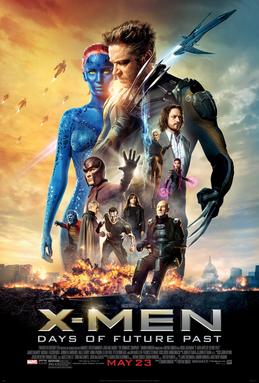
Fox has the same advantage with X-Men, and finally figured it out after four movies. It's no mistake that Days of Future Past and Apocalypse are being used, but House of M is not. Why Sony hasn't quite gotten the message is puzzling, but maybe if the rumors are true and some sort of Sony-Marvel alliance is still possible, that may change and we can get the Kraven's Last Hunt or The Night Gwen Stacy Died stories that we should have.

_____
* I will also be content if Squirrel Girl is the one who finally takes out Thanos in Infinity War Part 2.

Tuesday, November 18, 2014

No capes

"No capes!"
Over at The Hollywood Reporter, talking about the Universal plan to turn their classic monster properties into action-adventure films (presumably because that worked so well with Van Helsing), Universal chairman Edna Mode Donna Langley is quoted as saying "We don't have any capes" (in their catalog of films).

Mmmhmmm...


Tuesday, June 24, 2014

Batman's 25th anniversary

While there's a lot of churn around the 75th anniversary of Batman's first comic book appearance this year, Tim Burton's Batman had its opening weekend twenty-five years ago. A lot of people at the time thought casting Michael Keaton, who was mainly known for comedic roles, was a huge risk. But I think it paid off hugely.

Jack Nicholson's Joker remains iconic, even in the wake of Heath Ledger's terrific take on the character years later. Batman defined 1989 for me, and to this day I will still watch it any time it's on television (which is a LOT).

It remains to this day one of my all-time favorite genre films, helped shape modern superhero films, and was the inspiration for Batman: The Animated Series, which remains another favorite of mine. Thanks and congratulations to all involved in that groundbreaking film from a quarter century ago.


Friday, April 25, 2014

Who Framed the Avengers?

For obvious reasons, there is a lot of talk in fandom about the various Marvel properties owned by competing film studios. Fox owns the X-Men and the Fantastic Four, Sony owns Spider Man, and of course Marvel itself owns the rest, including the Avengers, Guardians of the Galaxy, Doctor Strange, Ant Man, etc.

Bear in mind that the studios, although rivals, aren't completely against the idea of doing cameos that cross studio lines. Apparently the Oscorp Tower almost made it into The Avengers (it was cut because by the time the building's design was finalized, the Avengers NYC skyline had already been rendered, and there wouldn't be time to include it). And because of a bit of contractual legerdemain, there will be a helping of shawarma relating to X-Men: Days of Future Past after the credits of the Amazing Spider Man II (but that isn't indicative of any coming cross-over between Spidey and the X-Men).

Now, this begs the question, given the multi-billion dollar potentials with the Marvel properties, between Spider Man, X-Men, and the Avengers (not to mention Fantastic Four, etc.), why don't the studios make some sort of deal to cross-pollinate their properties?

There is certainly precedent in Hollywood. Look at 1988's Who Framed Roger Rabbit?

In that film, Disney kept control of the project, but arranged deals with the owners of Bugs Bunny, Daffy Duck, Felix the Cat, and Betty Boop to bring those characters (and more) in as cameos. In exchange, the owners of those characters got to stipulate how they were used (Bugs and Mickey shared a scene, as did Donald and Daffy), and I'm sure were handsomely paid, and everyone hailed it as a milestone not only of animation but of inter-studio cooperation. They had Steven Spielberg to argue their case, but Joss Whedon might do as well, given his recent track record.

I see no reason the same sort of thing couldn't be done for the Marvel Universe properties. Fox has already said they'd be up for it.

What if the studios who owned the various characters arranged for very strictly controlled, limited, and reciprocal cameo appearances? Simple background stuff should be easy, assuming it can be worked out technically (as with the Oscorp building showing up in Avengers; surely the Avengers tower could show up as Spider Man swings by). It could be more involved than that. Wolverine gets a five-minute scene in Captain America 3 (reminiscing in a bar about World War 2?), and in return X-Men: Apocalypse gets a five-minute segment showing S.H.I.E.L.D. reacting to whatever the heck is going on, helicarriers and Nick Fury and all. If New York gets trashed in the new Fantastic Four movie, there's a quick scene of Spider-Man webbing some debris out of the way before it crushes a baby carriage, and in return Doctor Doom is seen turning down the Sinister Six when they come to him for assistance. The details could be worked out, but it could be done.

The point is that these sorts of crossovers don't have to be huge, multi-movie-spanning deals. Just a couple of minutes here and there, woven in and between the various studios, could not only cement the franchises as belonging to the same larger universe, but would also serve to raise all boats as people who like Spider Man might be a little more inclined to see Fantastic Four, and Avengers will pull in some more X-Men fans.

It worked for Roger Rabbit. It can work for Steve Rogers.

Monday, March 31, 2014

Thoughts on a shared Universal Monster Universe

So there's talk about Universal doing a reboot of 2004's Van Helsing, in the hopes of starting off a shared universe along the same lines of the Marvel Cinematic Universe. Apparently Bob Orci is starting off with a Mummy film (which could be a great place to start). Now, I might argue that Universal already did such a thing back in the 1930's and 40's, with their crossover films that connected classic monsters like Frankenstein's Monster, the Wolfman, and Dracula into a very loose and ad-hoc continuity. (Egads, does that put Abbott and Costello in the place of Agent Coulson as "the glue"???)

Two of the weaknesses in the 2004 Van Helsing, I thought, were the secret monster-hunting society and the attempt to cram a ton of monsters into the single film right off the bat. In fairness, the Marvel model hadn't yet been established, where a film focuses tightly on one character, which then leads into another, and another, with minor shared characters darting in and out of the continuity, and then you see the big team-up film that raises the stakes for the whole shared universe, which then leads into the next batch of single-character movies, etc., etc., etc.

I think it's a great model, but it takes time to lay the groundwork, and it can't be rushed into. That's exactly what I think Sony is doing with their Spider-man franchise (a Sinister Six movie next, but no Black Cat? Really?) and Warner Brothers is doing with the DC Universe (straight from a stand-alone Superman film to a huge mix-up with at least Superman, Batman, Wonder Woman, and Aqua Man). If Universal has the confidence to play the long game, they could come out with a really well-established shared universe around their monster properties.

Let's take an inventory of what, exactly, we're talking about, in terms of "A List" monsters:

  • Dracula
  • Frankenstein's Monster
  • The Wolfman
  • The Invisible Man
  • The Phantom of the Opera
  • Doctor Jekyll/Mister Hyde
  • The Hunchback of Notre Dame
  • The Gill Man (aka the Creature from the Black Lagoon)

More than enough to sustain a whole slew of films, if they're plotted together properly. There are also a ton of "B List" monsters and characters that could be woven in and amongst them, like the Mole People, Maleva the gypsy from the Wolfman, Van Helsing, Doctor Frankenstein, Ygor, Else Frankenstein, the Cult of the Cobra, the Creeper, etc.

One issue that would have to be addressed is the question of what time-period the movies would take place. Dracula and the Monster are immortal, but the other characters certainly aren't. Dracula originally takes place in the early 19th century, while the Creature from the Black Lagoon was set in the 1950's. Some sort of compression of time-frame would be needed, and some sort of "glue" the way S.H.I.E.L.D. binds the MCU together.

It's also something of the inverse of the MCU, since the monsters are the central, and repeating, characters. Heroes can come and go, but the monsters endure.

I picture this without a single overarching "glue", but rather more direct movie-to-movie connections. So there would be van Helsing as protagonist in a couple of Dracula movies, and a Frankenstein origin film followed by a Bride of Frankenstein-inspired story with Dr. Praetorius as protagonist, then Dracula would move over to Frankenstein, trying to force Frankenstein's son to repeat the experiment, introducing Maleva, then a Wolfman origin story set in the same town as Frankenstein, with a lot of the same secondary characters, and then a Dr. Jekyll and Mr. Hyde film with a lab assistant who will later become the Invisible Man, and so forth.

I think if they don't try to rush things, Universal has the potential to really put together an effective shared universe, treating the material seriously and still recalling the heyday of Universal monster movies where mash-ups between monsters were commonplace. Today we call that a shared universe, and if it's done deliberately, setting things up in one film that payoff in another, it can really work.

Saturday, January 18, 2014

70's Victorian Caper Films

There's a very specific sub-genre of film that I just can't get enough of, and that's the 70's Victorian caper film. There was a time in the 1970's when several period Victorian-era films were made that essentially were what we would call today "caper films". They show some sort of criminal enterprise and the various trials and travails in its execution. Sometimes these are shown from the point of view of the criminals, and sometimes from the point of view of the folks trying to capture said criminals.

Take, for example, The Great Train Robbery (1978). Starring Sean Connery and Donald Sutherland, it shows the painstaking preparation leading up to the first-ever robbery of a moving train in England in 1855. There's a shipment of gold being transported to pay the soldiers fighting in the Crimean War, and the crooks must secure four keys to open the safes on the train before they can actually pull off the heist. I love the great period costumes and sets, there's wonderful humor throughout (but not enough to turn it into a farce) and both Connery (who did his own stunts, including running along the top of a train going 55 mph) and Sutherland are spot-on as the calculating rogues orchestrating the robbery. Bonus points for the twist at the end.


I would argue that The Man who would be King (1975) would also fall into this category. Again starring Sean Connery, this time paired with Michael Caine as a pair of rogues who want to set themselves up as rulers of the nation of Kaphiristan (in the region of Afghanistan). This time we the Victorian period is represented by the British Indian colonial experience, with our two rogues being ex-British soldiers out to make a fortune for themselves. The set-up involves the big con they pull on every local warlord they meet, but naturally things can't go well indefinitely. Again, lots of great humor, but not a farce by any means.


Harry and Walter go to New York (1976), on the other hand, does dip more into the musical comedy end of the spectrum. It features James Caan (!) and Elliot Gould as a pair of would-be vaudevillians who decide to pull off the world's greatest bank robbery after escaping from prison. In so doing, they cross paths with Michael Caine, a gentleman celebrity criminal adored by all. It's a great wild romp of a movie, and the scenes of Caan and Gould doing 1890's song-and-dance numbers is worth the price of admission alone. It's not what one might call a "good" movie, but it's fun, and the sets and costumes are first-rate. 


The inverse of the genre is, of course, best served by Sherlock Holmes. Aside from the straight adaptations of the original Holmes stories (I personally prefer the Jeremy Brett versions that were originally shown on PBS from 1984-1994), the 1970's came up with two very different takes on the character. The Seven Percent Solution (1976) features Nicol Williamson (who played Merlin in the film Excalibur) as Holmes and Robert Duvall as Dr. Watson. The real "caper" here is Watson's plan to trick Holmes into going to Vienna to meet Dr. Sigmund Freud, played by Alan Arkin, to assist with Holmes' addiction to cocaine. Naturally, they stumble upon a real mystery while in Vienna, and the two plots intermingle nicely. A lot of excellent performances here, not without some humor (in particular the tennis match between Freud and the villainous Baron Karl von Leinsdorf, played by Jeremy Kemp).


Finally, we come to The Private Life of Sherlock Holmes (1970), which is less of a "caper" film than a more traditional Sherlock Holmes adventure, but which I nonetheless feel deserves inclusion here for its pitch-perfect presentation of Victorian London, even though the film has a decidedly... goofy quality in places, as if it couldn't decide if it wanted to be a serious movie or a comedy. Robert Stevens stars as Holmes, but I think Christopher Lee as his brother Mycroft steals the show. It's also one of the more fantastical Holmes adventures I've seen, bringing in the Loch Ness Monster of all things, and the film is (in)famous for its inferences regarding Holmes' sexuality, but for all the baggage I still enjoy it.


There are, of course, other Holmes films from the 70's, such as Sherlock Holmes in New York (1976) starring Roger Moore as Holmes, and Murder by Decree (1979) with Christopher Plummer in the role. There's just something about that era, and the way it was depicted in the 1970's, that has a certain authenticity to me that later films, even though they strive for just as much historical accuracy, just can't match.